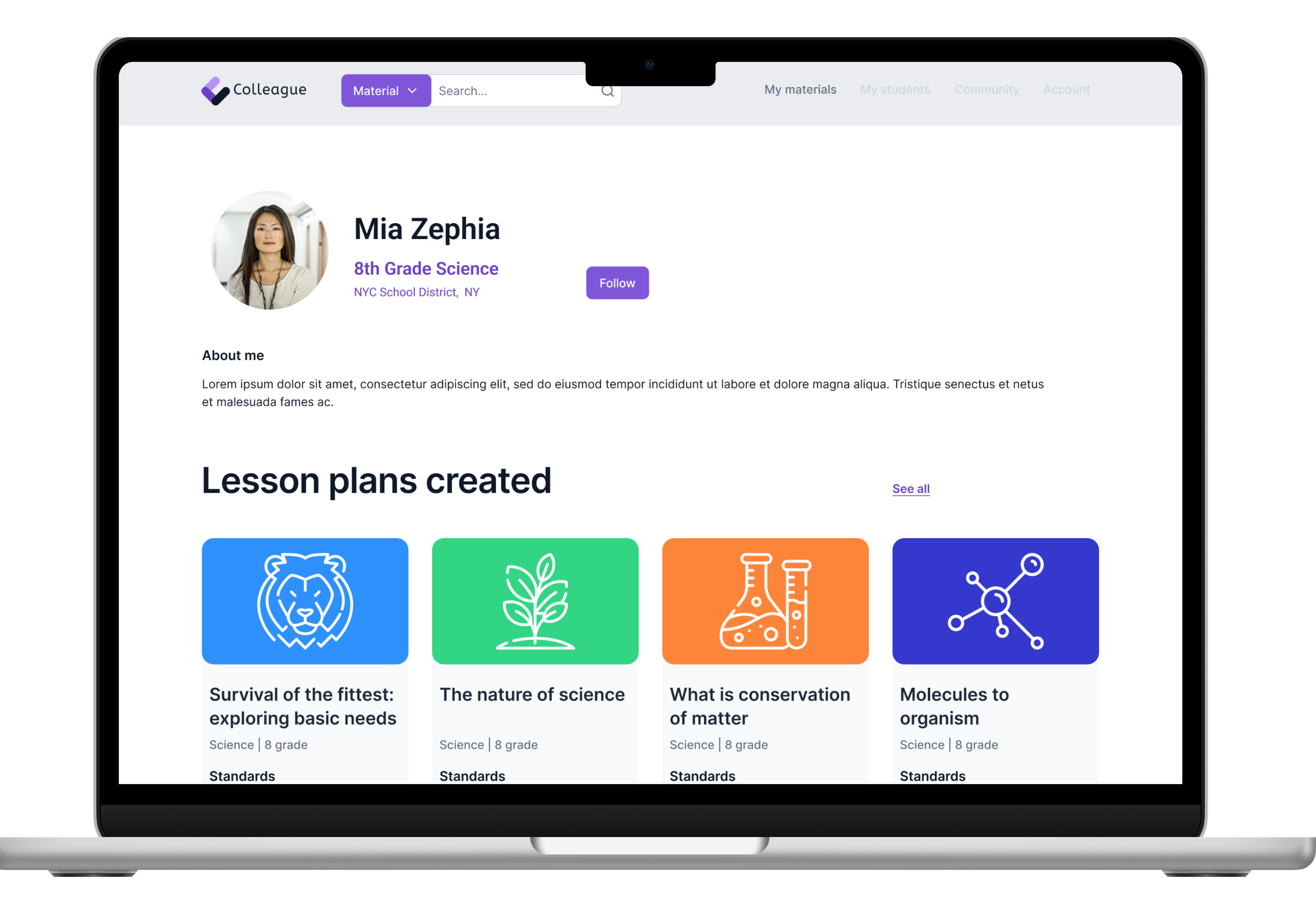
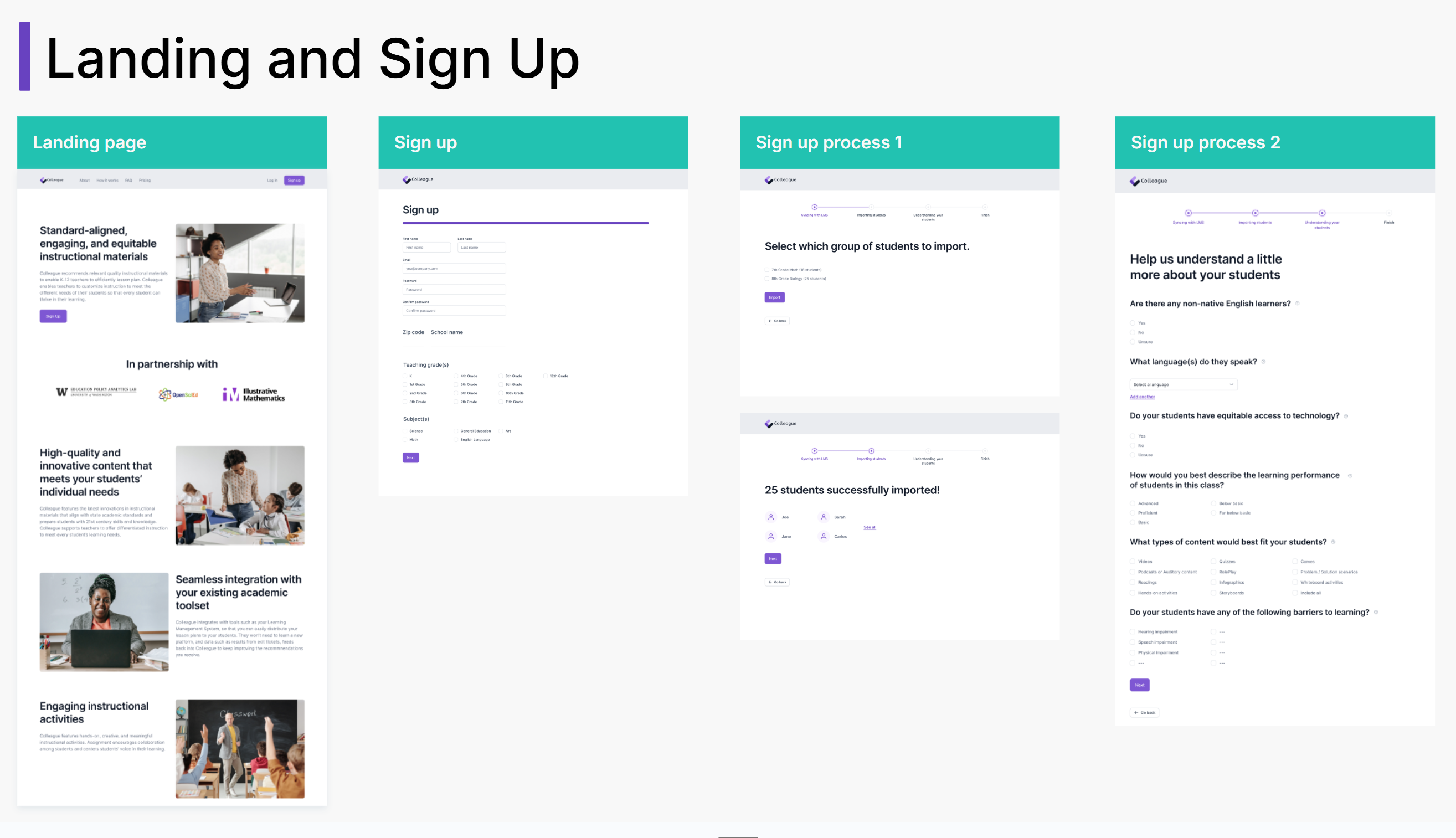
An AI-powered lesson-recommendation platform for K–12 teachers, built with UW's Education Policy Analytics Lab under an NSF grant. As primary UX researcher on a team of 4, I owned the full research lifecycle: planning through usability testing.
Teachers weren't struggling to find resources; they were overwhelmed by them, scattered across too many disconnected tools. As I explored AI-powered recommendations, a deeper need surfaced: teachers didn't want more options, they wanted vetted ones they could trust.
"It would be great to have a centralized platform where I can find resources in one place."
Teachers screen-shared and walked through their real lesson-planning process, including every tool they touched along the way.
Mapped 14 existing education and lesson-planning platforms to identify where current tools fell short for teachers.
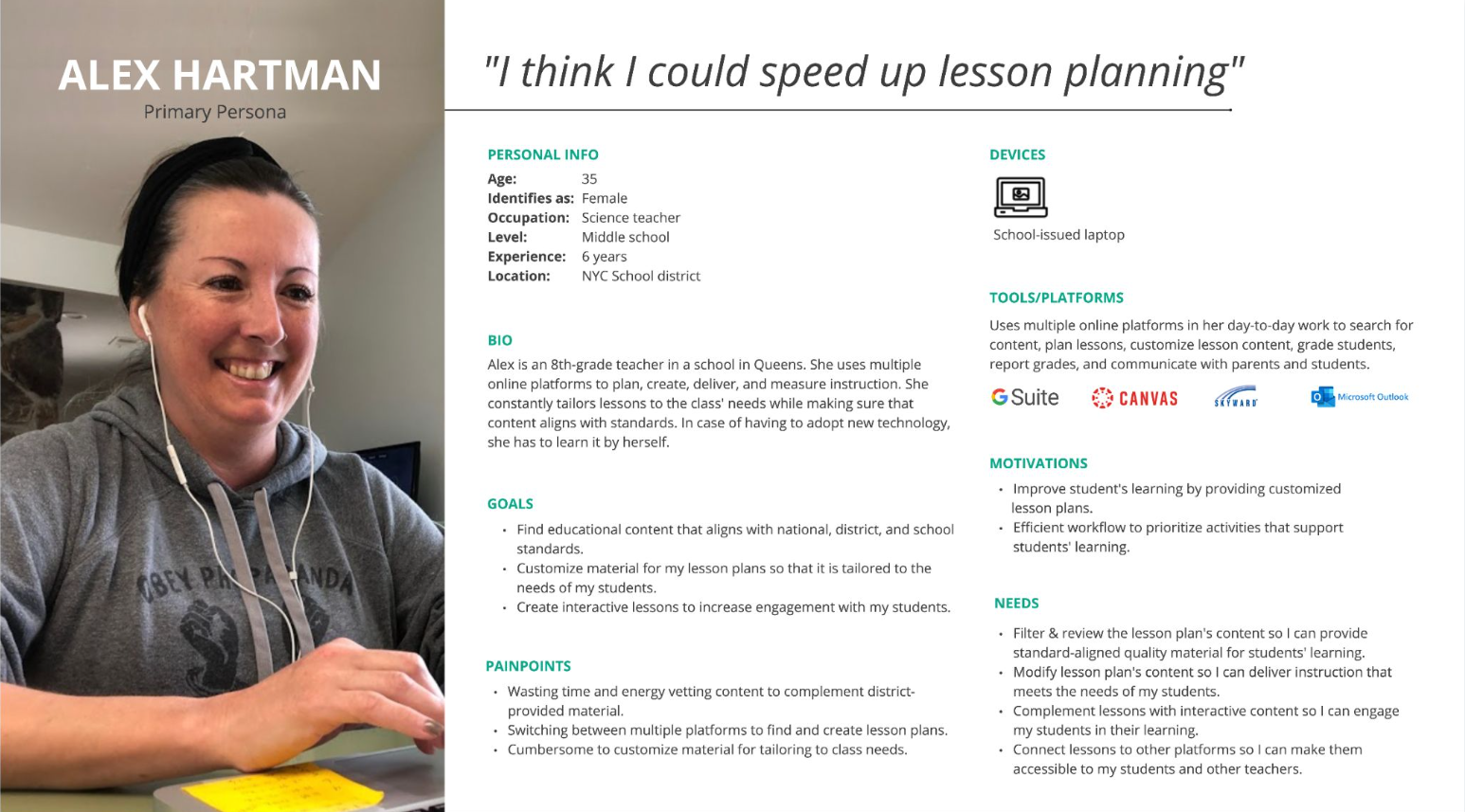
Synthesized findings into an affinity map and empathy map, then built personas representing typical K-12 educators to align the team around real needs.
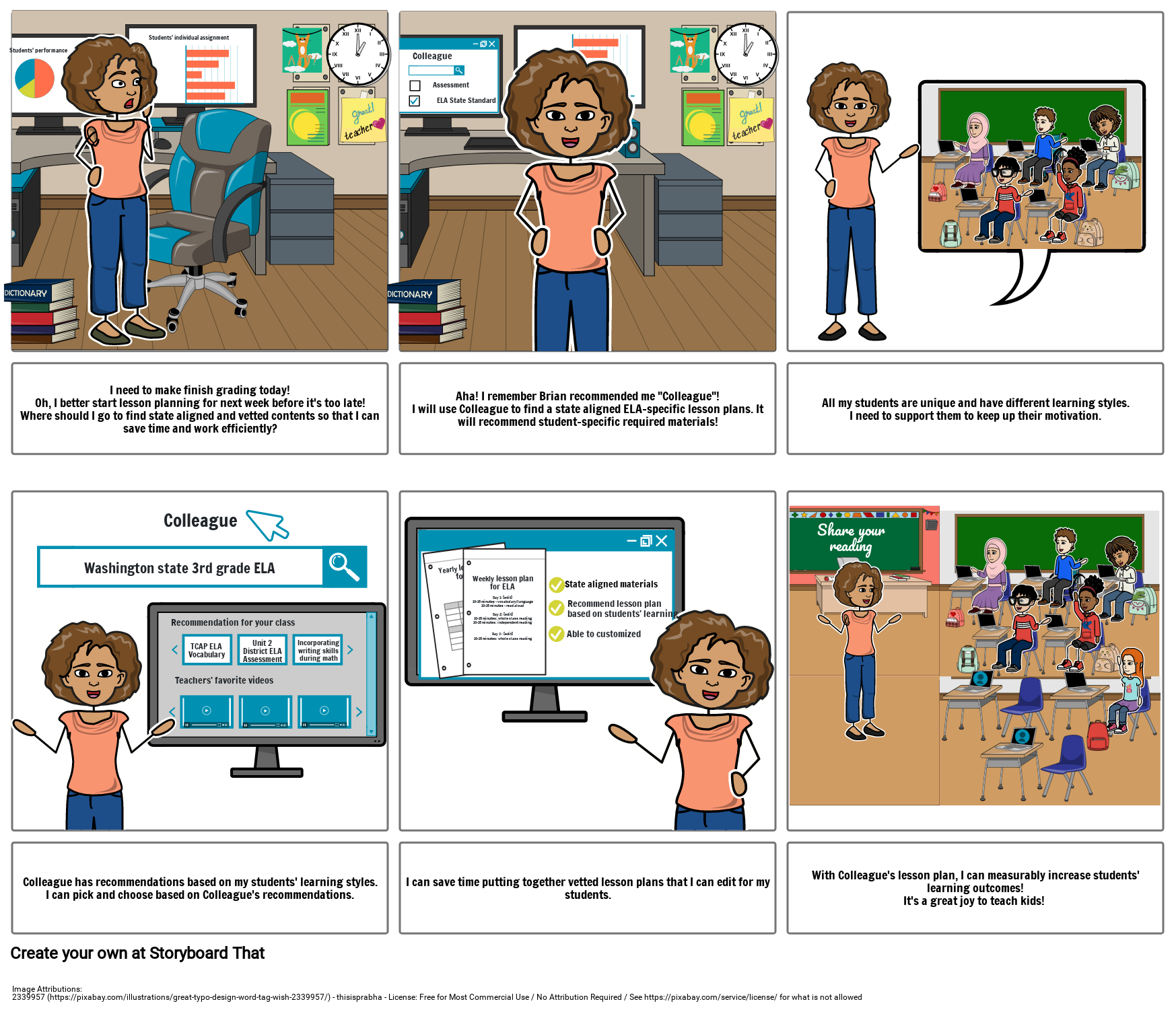
Ran 4 co-design sessions directly with teachers after identifying pain points, then sketched ideas and storyboarded the user journey based on what came out of those sessions.
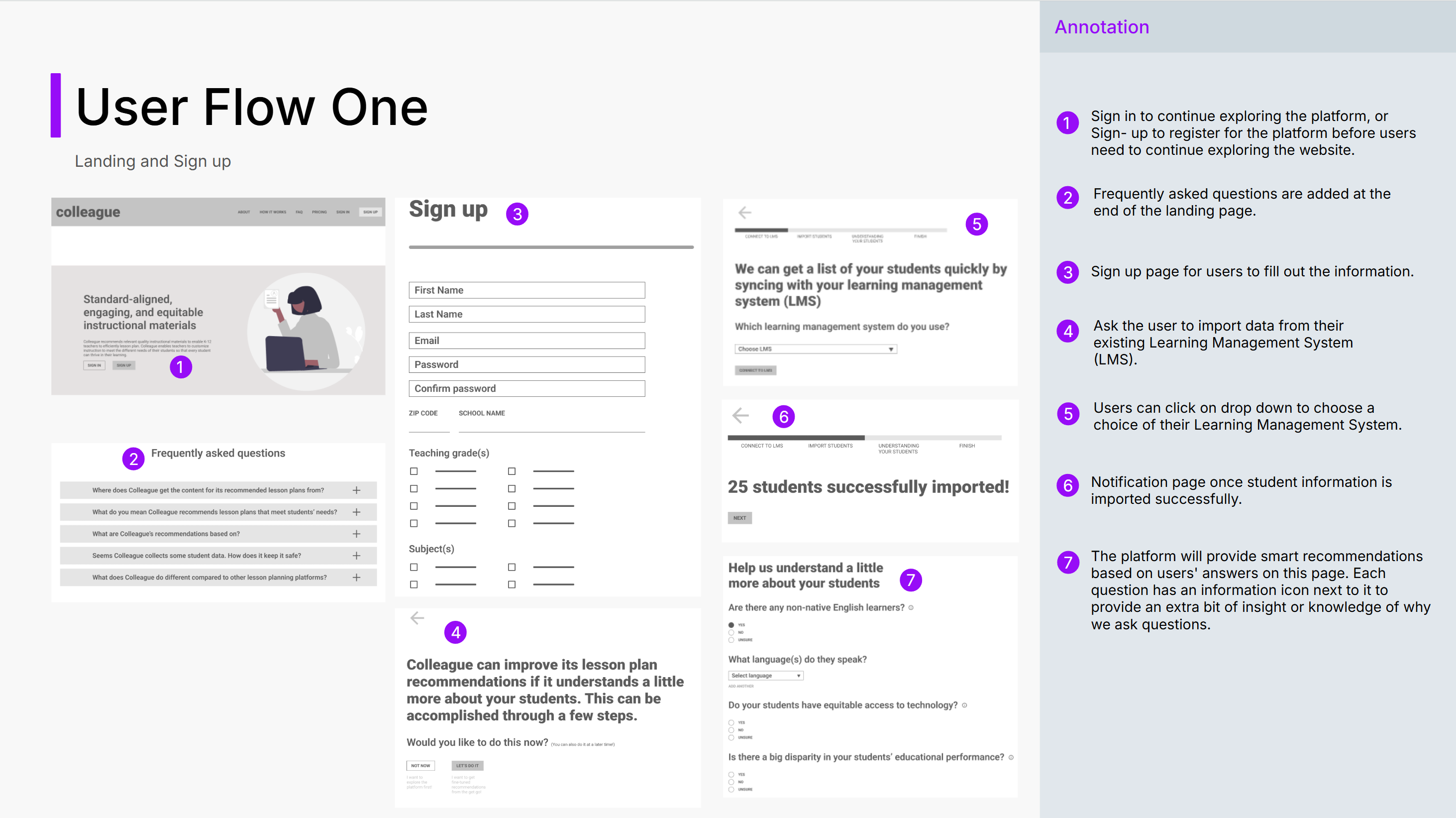
Built a medium-fidelity prototype and re-invited six K-12 teachers to test it across 4 flows: landing page review, finding/saving a lesson plan, editing a plan, and leaving feedback.
Sent screeners nationwide using publicly available school directories, and supplemented that with outreach through my own professional network and stakeholders' networks to reach additional qualified teachers. The screener stayed open for 2 weeks and validated each respondent as an actual K-12 teacher by collecting their school name, zip code, county, and work email address.
For co-design sessions, re-invited teachers who had already participated in an interview, rather than recruiting a fresh group, so sessions could build directly on context we already had instead of re-explaining the problem from scratch.


This project gave me a deep appreciation for the work K-12 teachers do and how genuinely invested they were in participating. Nearly every teacher I spoke with was tech-savvy and open to adopting new technology in their classroom, as long as it clearly boosted student learning and engagement.
Another important lesson was around stakeholder buy-in. Stakeholders were cautious about discussing AI directly with teachers early on, which limited how clearly I could learn whether teachers were truly willing to use AI in their own work and classrooms. It taught me the value of securing stakeholder alignment on research transparency before a study begins, rather than working around those concerns once it's already underway.
It also taught me about boundaries: stakeholders stayed closely involved throughout the process, and I learned that protecting research objectivity sometimes means setting limits on that involvement, not just accommodating it. Balancing stakeholder needs with unbiased findings turned out to be as much a part of the job as the research methods themselves.